-20197.jpg)
Why Should You Use Career Services Before Senior Year?
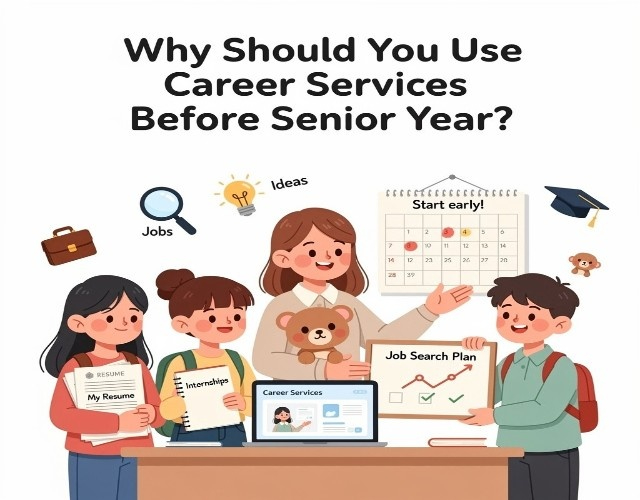
You should use career services before senior year because early career planning leads to significantly better outcomes. Students who visit career services as freshmen or sophomores secure internships at 2.3x higher rates than those who wait until senior year. Early users develop polished professional materials, build employer relationships, and make informed major choices aligning with career goals.
The Freshman Junior Advantage
Career planning follows developmental stages requiring multi-year preparation, not senior year scrambling.
Freshman year benefits
- Explore career paths matching your major before investing heavily
- Learn resume basics before needing them for internships
- Understand what employers in your field expect
- Access freshman specific networking events with less competition
- Build relationships with career counselors who track your progress
Sophomore year benefits
- Refine internship search strategies with professional guidance
- Practice interviewing before high stakes opportunities
- Connect with alumni in industries you're exploring
- Attend industry specific career fairs with preparation
- Develop LinkedIn profile and professional online presence
Junior year benefits
- Secure internships leading to full time offers (67% conversion rate)
- Prepare for recruiting season starting in September of senior year
- Network strategically with target companies through campus events
- Polish final resume and cover letter materials
- Practice behavioral interviews for competitive positions
Students who begin using career services freshman year secure full-time employment 4.2 months faster on average than senior-year-only users, reducing unemployment periods and financial stress post-graduation.
Career Services Beyond Resume Reviews
Career services offices offer comprehensive resources far beyond basic resume formatting, yet most students perceive them as "resume help only."
Full service offerings most students miss
- One on one career counseling exploring interests and fit
- Industry specific job boards not publicly available
- On campus interview programs with major employers
- Salary negotiation coaching (users negotiate $4,200 higher on average)
- Graduate school application support
- Career assessment tools (Myers-Briggs, StrengthsFinder)
- Mock interview practice with video recording and feedback
- Professional wardrobe closets (free suits for interviews)
- Networking event preparation and etiquette training
| These services remain free throughout your enrollment, yet only 22% of students visit before senior year when competition for appointments peaks and timeslots become scarce. |
How Can Alumni Networks Actually Help Your Job Search?
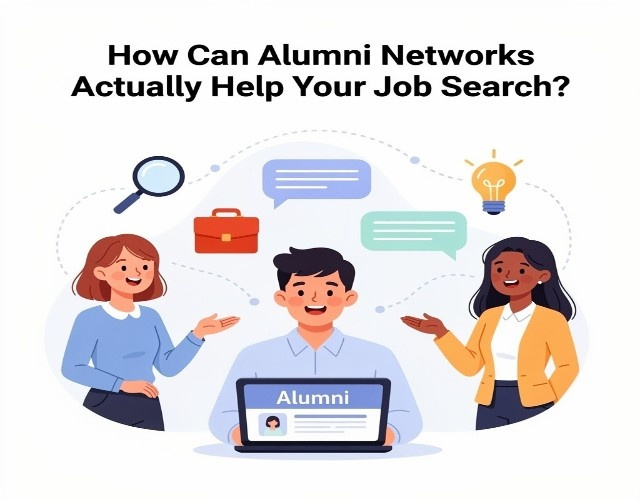
Alumni networks directly help job searches through informational interviews, providing insider industry knowledge (73% of alumni willing to help current students), referral opportunities improving application success rates by 400%, mentorship relationships offering long term career guidance, and direct job postings in alumni only channels. However, only 17% of students access alumni databases despite proven effectiveness.
Accessing Your Alumni Network
Most institutions maintain searchable alumni databases through platforms like LinkedIn, dedicated career portals, or alumni association websites. These databases allow filtering by industry, company, location, graduation year, and major.
How to find and connect with alumni
- Access your institution's alumni directory (usually through career services)
- Search LinkedIn using "[Your School Name]" filters
- Join school specific LinkedIn groups by industry
- Attend regional alumni networking events
- Participate in alumni mentorship programs (formal or informal)
- Request alumni contact lists from career services for specific companies
The key is reaching out professionally with specific questions rather than directly requesting jobs. Alumni respond positively to genuine interest in their career paths and thoughtful questions about their industries.
Effective Alumni Outreach Strategy
Cold emails to alumni receive 62% response rates when properly crafted, compared to 8% response rates for generic "can you help me find a job" messages.
Effective outreach template
Subject: [School Name] Student Interested in [Industry/Company]
Dear [Name],
I'm a [year] at [School Name], majoring in [major], and I came across your profile through our alumni network. Your career path in [specific field] is exactly what I'm hoping to pursue.
I'm particularly interested in [specific aspect of their career/company], and I'd love to learn more about your experience. Would you be available for a brief 15-20 minute phone call in the coming weeks? I'm happy to work around your schedule.
Thank you for considering my request.
Best regards, [Your name] [School Name], Class of [year] [LinkedIn profile URL]
During informational interviews, ask
|
Remember! Never ask for jobs directly in initial conversations. Build relationships first. Many job opportunities emerge naturally from positive informational interviews when alumni proactively offer to refer candidates they've vetted through conversation.
What Free Professional Development Workshops Should You Attend?
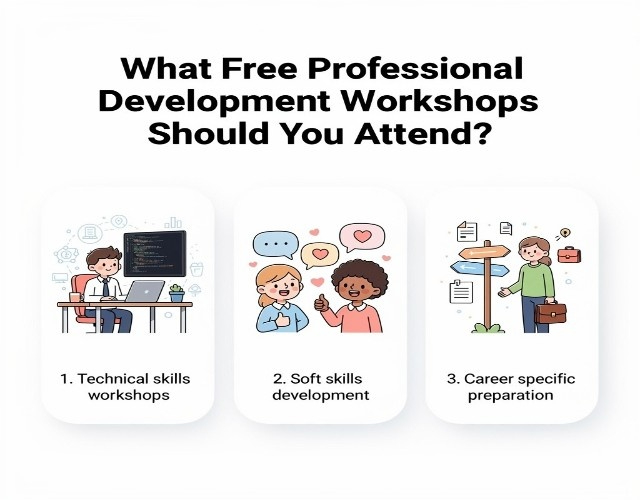
Students should attend networking skills workshops, teaching conversation strategies and follow up techniques, LinkedIn optimization sessions increasing profile views by 340%, industry specific career panels featuring hiring managers, salary negotiation workshops (attendees negotiate $4,200 higher on average), personal branding sessions, and interview technique workshops with mock interview practice. These free workshops occur weekly at most campuses, yet average only 12 to 15 attendees despite a capacity for 50+.
High Impact Workshop Categories
1. Technical skills workshops
- Excel and data analysis (requested by 78% of employers)
- Coding bootcamps or introductory programming
- Adobe Creative Suite for marketing roles
- Statistical software (SPSS, R, SAS) for research positions
- Project management certifications
2. Soft skills development
- Professional communication and email etiquette
- Presentation skills and public speaking
- Time management and productivity strategies
- Teamwork and collaboration in professional settings
- Conflict resolution and difficult conversations
3. Career specific preparation
- Case interview preparation for consulting
- Technical interview strategies for tech roles
- Teaching demonstration workshops for education majors
- Portfolio development for creative fields
- Research presentation skills for graduate school
Students who attend 5+ professional development workshops during college report 68% confidence in job preparedness versus 34% for non-attendees, directly correlating with interview performance and offer rates.
Finding Workshop Opportunities
Check multiple campus sources, as workshops are often poorly advertised and under promoted.
Where to find workshops
- Career services event calendars (check weekly)
- Student organization newsletters in your major
- LinkedIn Events from your institution
- Academic department announcements
- Campus wide event aggregators or apps
- Library professional development series
- Campus recreation leadership programs
Set calendar reminders to check these sources weekly. The best workshops fill quickly, and many require advance registration.
How Do Faculty Office Hours Help Career Development?
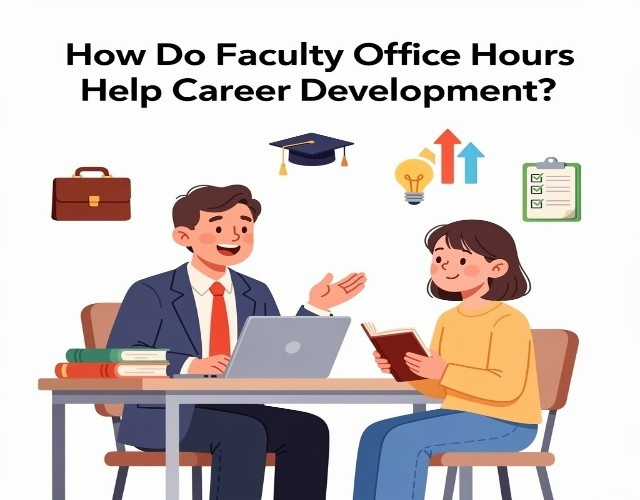
Faculty office hours help career development through industry connections and introductions (72% of professors actively collaborate with industry), research opportunities building specialized skills (23% of faculty mentored students publish), graduate school recommendation letters requiring sustained relationships, insider knowledge about career paths in specific fields, and networking at academic conferences. Yet only 24% of students visit office hours beyond asking about assignments.
Beyond Academic Questions
Professors possess extensive industry networks, research connections, and practical career insights that students rarely access. Many professors spent years in industry before academia, or maintain consulting relationships providing current market knowledge.
Career focused office hour topics
- "What career paths do graduates from this program typically pursue?"
- "Could you introduce me to professionals in [specific field]?"
- "What skills should I develop to be competitive for [career]?"
- "Are there research opportunities in your lab I could join?"
- "Would you be willing to review my resume for [industry] positions?"
- "What professional conferences should I attend in this field?"
Building relationships strategically
- Visit office hours 3 to 4 times per semester (not just when struggling)
- Ask thoughtful questions about lecture material, showing engagement
- Update professors on career progress and internship searches
- Request informational interviews with their industry contacts
- Express genuine interest in their research or professional work
Faculty who know students well write stronger recommendation letters. Generic letters stating "good student who earned a B+" harm applications, while specific letters describing research contributions, intellectual growth, and demonstrated capabilities significantly strengthen graduate school and job applications.
Research Opportunities
Undergraduate research provides specialized skills, publication credentials, and professional references that dramatically enhance job and graduate school applications. Research experience demonstrates initiative, technical competency, and intellectual curiosity that employers value.
Benefits of undergraduate research
- Develop specialized technical skills unavailable in coursework
- Gain publication credentials for CV/resume
- Present research at conferences for networking
- Secure strong, detailed recommendation letters
- Clarify graduate school and career interests
- Build relationships with faculty in your field
Students with undergraduate research experience receive graduate school acceptance rates of 67% versus 42% for applicants without research credentials. Employers in STEM and social science fields particularly value research experience demonstrating analytical capabilities.
What Career Focused Student Organizations Are Worth Joining?
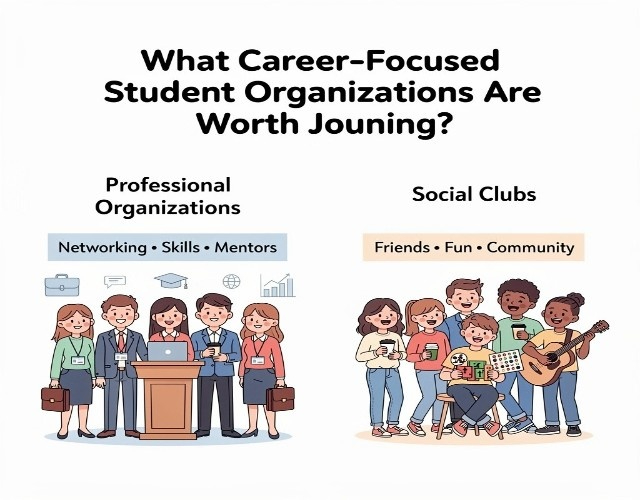
Career focused student organizations worth joining include professional fraternities (82% employment rate versus 56% campus average), industry specific clubs hosting employer networking events, student chapters of professional associations offering national networking and conferences, consulting clubs teaching case interview skills, entrepreneurship clubs providing startup experience and mentorship, and pre professional programs (pre-med, pre-law) offering structured preparation.
Professional Organizations vs. Social Clubs
Professional student organizations differ fundamentally from social clubs through industry connections, skill development, and employer networking rather than purely social activities.
Key distinguishing features
- Regular employer presentations and networking events
- Industry conference attendance with funding support
- Resume and interview workshop series
- Alumni mentorship programs
- Internship and job postings exclusive to members
- Skill building workshops (Excel, case interviews, coding)
- Company visit opportunities to major employers
High impact professional organizations
|
|
|
|
|
|
|
Membership typically costs $20 to 50 annually yet provides networking worth thousands through employer connections and skill development workshops.
Maximizing Organization Value
Simply joining provides minimal benefit. Active participation and leadership roles produce measurable career outcomes.
Strategic involvement approach
|
Students holding leadership positions in professional organizations receive job offers 3.7 months earlier on average than general members and 5.2 months earlier than non-members, demonstrating tangible acceleration of job search timelines.
How Should You Use Campus Internship Databases?
Use campus internship databases by searching weekly for new postings (employers post continuously, not just in fall), setting up automatic alerts for specific keywords and industries, applying to 15 to 20 positions per search cycle rather than 2 to 3, and leveraging exclusive postings unavailable on public job boards. Campus databases show 3.2x higher application success rates than general job boards due to employer institution relationships.
Exclusive Campus Posting Advantage
Many employers post exclusively to specific campuses or prioritize campus applications over public postings. These exclusive opportunities face less competition and demonstrate employer interest in your institution's students specifically.
Why campus postings outperform public boards
|
Students applying through campus portals receive 31% interview rates versus 9% through general job boards like Indeed or LinkedIn, demonstrating a substantial advantage of institution-specific channels.
Effective Database Search Strategies
Optimize your search approach
- Search twice weekly rather than monthly (postings update continuously)
- Use various search terms (internship, co-op, apprenticeship, summer program)
- Set keyword alerts for specific industries or companies
- Filter by application deadline rather than posting date
- Save interesting postings immediately before they're removed
- Apply within the first week of posting for best visibility
- Follow up on applications through career services connections
Application volume matters
Landing competitive internships requires a significant application volume. Industry data shows
- 15 to 20 applications, 4 to 5 interviews, 1 to 2 offers (typical conversion)
- Students applying to fewer than 10 positions have 38% offer rates
- Students applying to 20+ positions have 71% offer rates
Quality applications matter, but volume creates opportunities. When managing multiple internship applications alongside coursework, consider using a professional essay writing service for routine assignments during peak application periods, allowing focus on tailored cover letters and application materials directly impacting internship outcomes.
What Is the ROI of Using Campus Career Resources?
The ROI of campus career resources includes $8,500 higher starting salaries for career services users, 89% employment rate within six months versus 56% for non users, 4.2 months faster job placement, reducing unemployment periods, 2.3x higher internship acquisition rates leading to full time offers, and stronger professional networks providing career long benefits. These outcomes occur from free resources already covered by tuition.
Measurable Outcomes by Resource
Career services users (3+ visits)
Alumni network users
Professional organization members
Undergraduate research participants
These metrics demonstrate concrete return on time invested in career resource utilization throughout college rather than senior year scrambling. |
How Can You Create a Strategic Career Resource Plan?
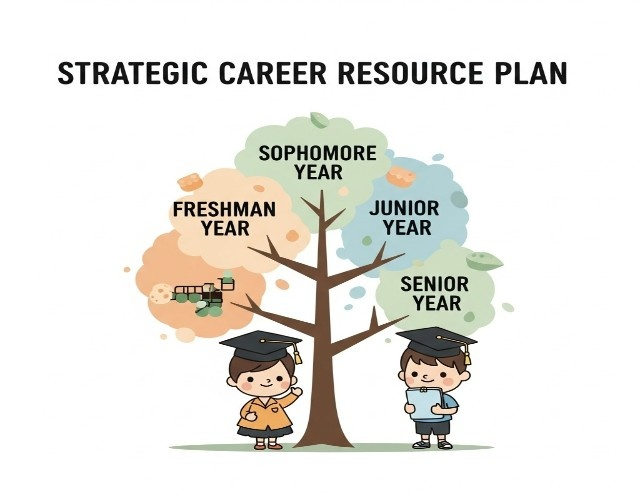
Create a strategic career resource plan by mapping resources to specific academic years, scheduling regular career services appointments each semester (not just when job searching), building faculty relationships progressively through consistent office hours, joining 1 to 2 professional organizations as a sophomore, and pursuing leadership by junior year, and accessing the alumni network continuously for informational interviews rather than last minute job requests.
Year by Year Action Plan
Freshman Year: Exploration and Foundation
- Visit career services for an introductory meeting (September/October)
- Create an initial resume with career counselor guidance
- Attend 2 to 3 professional development workshops
- Visit the office hours of 2 professors regularly
- Join 1 career-focused student organization
- Complete at least 1 informational interview with alumni
- Explore internship databases to understand opportunities
Sophomore Year: Skill Building and First Internship
- Schedule career counseling to refine career goals (early fall)
- Apply to summer internships through campus databases
- Attend an industry specific career fair with preparation
- Take a leadership role in a professional organization
- Conduct 3 to 4 alumni informational interviews
- Develop LinkedIn profile with career services feedback
- Pursue an undergraduate research opportunity if interested
- Attend 4 to 5 skill-building workshops
Junior Year: Strategic Positioning
- Secure substantive internship (recruiting starts September)
- Practice behavioral interviews with career services
- Request faculty recommendations for opportunities
- Attend company information sessions of target employers
- Expand alumni network in target industry/geography
- Polish final resume and cover letter materials
- Attend salary negotiation workshop
- Consider graduate school information sessions if relevant
Senior Year: Execution and Offers
- Begin full-time job search immediately (September recruiting)
- Schedule mock interviews before on-campus interviews
- Utilize alumni network for final-round preparation
- Negotiate offers with career services coaching
- Attend senior-specific networking events
- Maintain contact with key faculty and career counselors
- Join the young alumni network before graduation
This structured approach distributes career preparation across four years rather than overwhelming senior year with activities requiring an earlier foundation.
Key Takeaways
Maximize campus career resources through these evidence based strategies:
Career services deliver measurable ROI with users earning $8,500 higher starting salaries and achieving 89% employment rates versus 56% for non users. Visit before senior year when competition for appointments is lower and multi year preparation is possible.
Alumni networks provide 400% higher application success through referrals, yet only 17% of students access alumni databases. Conduct informational interviews throughout college, building relationships before needing job search assistance.
Professional development workshops and student organizations accelerate employment by 3 to 7 months through networking, skill building, and employer connections. Active participation and leadership roles maximize value beyond passive membership.
Faculty office hours offer career advantages beyond academic support, including industry introductions, research opportunities, and strong recommendation letters. Visit 3 to 4 times per semester, building relationships over time rather than transactional interactions.
Campus internship databases show 3.2x higher success rates than public job boards due to exclusive postings and employer institution relationships. Apply to 15 to 20 positions per cycle through multiple channels, including campus specific portals.
Career resource utilization separates employed graduates from struggling job seekers, yet most students discover resources too late. The 4.2 month faster job placement and $8,500 salary premium demonstrate the concrete value of proactive engagement with free campus services already covered by tuition.
When managing career preparation alongside demanding coursework, consider using a trusted essay writing service for routine assignments during peak recruiting and application seasons, allowing focus on resume perfection, interview preparation, and networking activities that directly determine post graduation employment outcomes and career trajectories.