-19525.jpg)
Example #1: Elementary (Grades 3-5) With Annotations
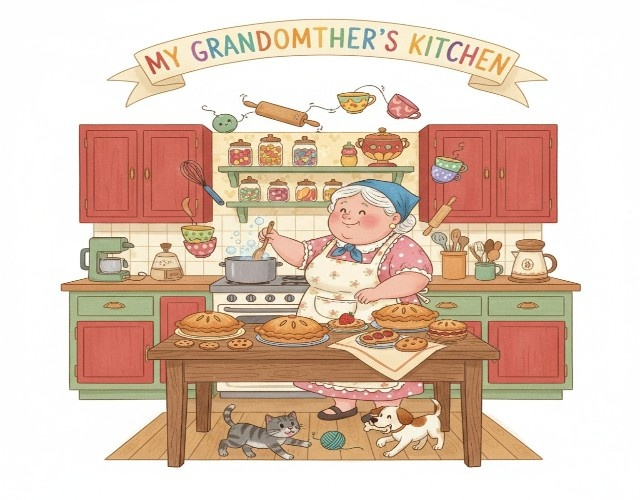
"My Grandmother's Kitchen"
Grade Level: 6th | Length: 404 words
[INTRODUCTION: Establishing Dominant Impression]
Every Saturday morning, I return to my grandmother's kitchen, drawn by forces stronger than habit or obligation. This room embodies warmth and tradition, a sanctuary where time slows, and worries dissolve in the steam rising from simmering pots.
Annotation: Thesis establishes dominant impression ("warmth and tradition, that all subsequent details will reinforce.)]
[BODY PARAGRAPH 1: Entrance/First Impressions as Spatial Organization]
The threshold creaks familiarly underfoot, announcing arrivals as it has for forty years. Immediately, yeasty aromas envelope you, bread rising on the counter, its surface smooth and taut like a balloon ready to burst. Morning light streams through lace curtains, casting intricate shadows that dance across worn linoleum, its pattern faded from decades of footsteps.
Annotations
- SOUND: "creaks" (specific verb).
- SMELL: "yeasty aromas" (specific scent).
- SIGHT: "lace curtains," "intricate shadows," "worn linoleum."
- TOUCH: "smooth and taut" (tactile comparison).
- SIMILE: "like a balloon ready to burst."
- SPATIAL: Begins at entrance, moves inward.
[BODY PARAGRAPH 2: Counter Area Layering Multiple Senses]
The counter sprawls across one wall, its surface scarred from countless chopping sessions. Flour dusts everything like fresh snow, the rolling pin's wooden handle, the ceramic mixing bowl with its hairline crack, even the windowsill where herbs grow in mismatched pots. Basil's pungent sweetness mingles with rosemary's pine sharp scent. My fingers trail across the counter's cool surface, catching on familiar grooves where knives have bitten too deep.
Annotations
- SIGHT: "flour dusts...like fresh snow" (simile), "hairline crack," "mismatched pots."
- SMELL: "basil's pungent sweetness," "rosemary's pine-sharp scent" (specific descriptions).
- TOUCH: "cool surface," "grooves where knives have bitten" (personification).
- SHOW NOT TELL: Shows age/use through physical details rather than stating "old counter."
[BODY PARAGRAPH 3: Stove Area Center of Activity]
The stove anchors the room, a cast iron beast perpetually radiating heat that makes nearby chairs warm even in January. Blue flames dance beneath blackened kettles. Water bubbles in rhythmic percussion. Tomato sauce simmers, releasing basil and garlic perfume that promises Sunday dinner delights. Steam rises in translucent columns, warming my face, making my eyeglasses fog.
Annotations
- METAPHOR: "cast-iron beast" (gives stove personality/presence).
- SIGHT: "blue flames," "blackened kettles," "translucent columns."
- SOUND: "bubbles in rhythmic percussion."
- SMELL: "basil and garlic perfume."
- TOUCH/TEMPERATURE: "radiating heat," "warm," "warming my face."
- PERSONIFICATION: "promises Sunday dinner delights."
[BODY PARAGRAPH 4: Table Heart of Gathering]
The table occupies the kitchen's heart, its oak surface smooth from decades of elbows and hands. Six mismatched chairs surround it, each with stories in its scratches and stains. A crocheted tablecloth, yellowed with age, protects the wood during meals. Here, morning coffee steams in chipped mugs while conversation flows as freely as the brew. Cookies cool on wire racks, their edges golden brown, their centers still soft enough to leave fingerprints.
Annotations
- SIGHT: "oak surface," "mismatched chairs," "yellowed...crocheted tablecloth," "golden-brown" edges.
- TOUCH: "smooth from decades," "soft enough to leave fingerprints."
- TASTE: Implied through "cookies," "coffee."
- SHOW NOT TELL: Shows the table's importance through gathering details rather than stating "important place."
- DOMINANT IMPRESSION: Details of use and wear reinforce warmth/tradition theme.
[BODY PARAGRAPH 5: Window Area Connection to Outside World]
Beyond the table, the window frames a view of the backyard garden, tomato plants staked in neat rows, their leaves rustling in the morning breeze. Sunlight warms the windowsill where grandmother's hands have rested countless times, watching seasons change. The glass bears fingerprints, small ones from grandchildren, larger ones from adults. Each smudge tells a story of someone who stood here, looking out or looking in.
Annotations
- SIGHT: "tomato plants," "neat rows."
- SOUND: "leaves rustling."
- TOUCH: "sunlight warms."
- SHOW NOT TELL: Shows family presence through fingerprints rather than stating "family gathers here."
- DOMINANT IMPRESSION: Window details reinforce warmth through family connection evidence.
[CONCLUSION: Reinforcing Without Repeating]
The warmth radiating from this kitchen isn't merely temperature; it's the heat of family bonds, tradition simmering across decades, love baked into every surface. Years from now, wherever I am, the scent of rising bread will transport me instantly back to this room, this feeling, this sanctuary that shaped who I've become.
Annotations
- SYNTHESIS: Reinforces dominant impression (warmth/tradition) without repeating exact details.
- METAPHORICAL LANGUAGE: "love baked into every surface."
- REFLECTION: Addresses significance.
- FINAL IMAGE: "scent of rising bread will transport me" (memorable sensory detail).
- EMOTIONAL RESOLUTION: Provides closure through reflection on lasting impact.]
What Makes This Work:
If you’re learning descriptive writing, this descriptive writing sample offers a clear example of structure and style you can follow. |
Do you like this example? want an essay this good?
We'll write a custom descriptive essay for your subject:
- Written by academic specialists
- Any grade level, any topic
- Vivid sensory language
- Delivered on time guaranteed
Real writers. Zero AI. Unlimited revisions.
Order NowExample #2: Middle School (Grades 6-8)

The First Snowfall
Grade Level: 7th | Length: 487 words
I woke to silence, the thick, muffled quiet that only comes with snow. Pressing my face against the cold bedroom window, I watched the world transform under a blanket of white. The first snowfall always felt magical, like nature had erased everything and started fresh.
Outside, fat snowflakes drifted down like feathers from a torn pillow, each one taking its own winding path to earth. They landed on tree branches, piling up in crooked lines along each limb. The old oak tree in our front yard looked like a giant wearing a white fur coat. Snow clung to every surface, fence posts wore little caps, car roofs disappeared under smooth domes, and the street signs held small mountains balanced on their flat tops.
The silence felt alive somehow, as if the snow absorbed every sound. No cars rumbled past. No dogs barked. Even the wind held its breath. When I opened the window a crack, cold air rushed in, sharp and clean. It smelled like winter, fresh and metallic, like breathing ice.
I pulled on my warmest clothes and stepped outside. The first thing I noticed was the crunch. Each footstep broke through the top crust with a satisfying sound, part crackle, part squeak. I was the first person on our street to walk outside, and my boots left a trail of dark footprints behind me like a trail of breadcrumbs in a fairy tale.
The cold bit at my cheeks and nose immediately. My breath came out in white puffs that hung in the air before fading. I pulled my scarf higher, tucking my chin into the scratchy wool. My fingers started to tingle inside my gloves, not quite cold yet but heading that direction.
I scooped up a handful of snow to examine it closely. The flakes had already packed together, but I could still see their individual shapes, tiny stars and hexagons too perfect to be real. The snow felt both light and heavy at the same time, the way foam feels solid until you squeeze it. When I pressed it between my gloves, it compressed into a solid ball, smooth and cold.
Across the street, my neighbor opened his door. He laughed when he saw the snow and waved at me. His voice sounded loud in the quiet morning, echoing off the snow covered houses. Soon, other doors opened. Kids ran outside, squealing. Someone started a car, and its engine rumbled and coughed. The spell was breaking as the neighborhood woke up.
I stood there a moment longer, trying to memorize that perfect white world before everyone turned it into slush and mud. The snow kept falling steadily, replacing whatever we disturbed as fast as we could disturb it. My eyelashes caught flakes that melted instantly from my warmth. I tilted my head back and stuck out my tongue, catching snowflakes that tasted cold and clean and like absolutely nothing at all, which was somehow perfect.
What Makes This Work:
|
You can apply the same approach shown here by using our descriptive essay outline as a planning guide.
Example #3: High School (Grades 9-12)
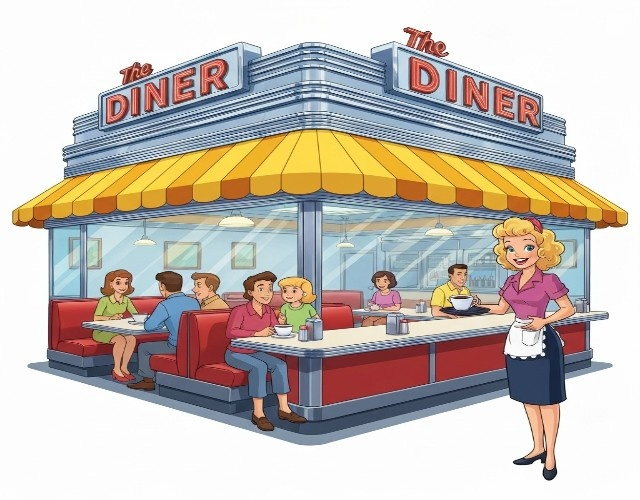
The Diner at Midnight
Grade Level: 11th | Length: 682 words
The diner glows like a beacon on the empty highway, neon pink and blue reflecting off wet pavement, fluorescent lights blazing through plate-glass windows that reveal everything inside like a stage set for some late-night performance where nobody bought tickets. I pull into the cracked parking lot at twelve-thirty on a Tuesday, because some nights you just can't sleep, and sitting alone at home makes the insomnia worse.
The door's pneumatic hiss announces my entrance. Warm air hits me immediately, thick with competing smells, burnt coffee, bacon grease, pie that's been sitting under heat lamps too long, industrial cleaner trying and failing to mask it all. The fluorescent lights hum overhead, that particular frequency that lives somewhere between sound and headache, casting everyone in an unflattering greenish pallor that makes us all look slightly ill.
A waitress materializes from the kitchen. Her nametag says "Deb" in faded letters, and her face suggests she's seen every type of midnight customer the highway can produce. "Sit anywhere, hon," she says, her voice carrying decades of cigarettes and tired kindness. Her shoes squeak on the linoleum as she pours coffee into a mug before I even reach the booth, muscle memory from thousands of identical nights.
I slide into a booth by the window, the red vinyl seat cracked and repaired with silver duct tape that catches on my jeans. The table's Formica surface bears the archaeological record of past customers, scratched initials, coffee rings that no amount of scrubbing can erase, and burn marks from cigarettes back when you could smoke inside. Someone named "Jake" loved someone named "Amy" in 1987, if the carved heart is to be believed.
The coffee arrives in a heavy ceramic mug, slightly chipped at the rim. Steam rises in lazy spirals. I cup my hands around it, savoring the warmth. The coffee tastes exactly like every diner coffee everywhere, simultaneously too strong and too weak, bitter with an undertone of something metallic, but hot and caffeinated, and that's what matters at half past midnight.
Around me, the diner's other residents occupy their private islands. Two truck drivers sit at the counter, exchanging war stories in low rumbles punctuated by fork-scraping-plate percussion. A businessman in a wrinkled suit works on a laptop, tie loosened, jacket crumpled in the booth beside him, his fingers attacking the keyboard with quiet desperation. In the corner booth, a young couple shares fries and speaks in whispers, their hands intertwined on the table, existing in a bubble the rest of us instinctively don't burst.
The kitchen sounds provide the soundtrack. Metal clangs against metal. The grill hisses as something hits its surface. Orders get called in that compressed diner dialect, "Adam and Eve on a raft, wreck 'em!", that sounds like a foreign language to outsiders. The soda machine gurgles and spurts, filling glasses with ice and cola that fizzes loudly in the relative quiet.
Deb returns, order pad in hand, pen poised. I don't need the menu; no one who comes to diners at midnight actually needs the menu. "Scrambled eggs, wheat toast, crispy bacon," I say. "And more coffee." She writes nothing down, just nods and squeaks back toward the kitchen. Five minutes later, the plate arrives, eggs glistening with butter, toast cut diagonally the way diners always cut toast, bacon so crisp it shatters when bitten. The eggs taste exactly right, which is to say slightly greasy and heavily salted and somehow comforting in their absolute ordinariness.
Outside, a semi rumbles past, its headlights sweeping across the diner's interior like a searchlight, briefly illuminating us all before plunging us back into our private fluorescent bubble. The driver doesn't stop. The highway keeps moving while we remain suspended in this timeless space where it's always midnight, always raining, always just us insomniacs and night workers and the lost seeking something, even if it's just eggs and coffee and the company of strangers who don't ask questions.
I linger over the coffee refills, in no hurry to return to my empty apartment and its oppressive silence. Here, surrounded by strangers and bad coffee and the comforting sounds of humanity existing in the small hours, I'm part of something. The loneliness doesn't disappear, but it softens into something more bearable.
What Makes This Work:
|
Remember! Writing that truly captures a reader’s imagination relies on the power of words. Descriptive language examples are a great way to see how writers use vivid imagery, sensory details, and figurative language to bring scenes, people, and emotions to life.
Example #4: College Level
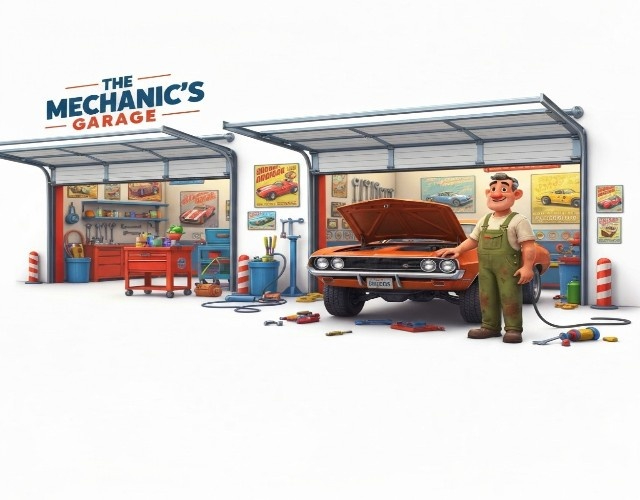
The Mechanic's Garage
Grade Level: College | Length: 751 words
The garage exists in permanent twilight, daylight struggling through decades of accumulated grime on skylights thirty feet overhead, fluorescent tubes hanging from chains providing puddles of harsh illumination that leave the corners in shadow, as if the building itself resists full visibility. Everything here lives in service of function over form, beauty an accidental byproduct of purposeful design.
Oil permeates everything. Not just the smell, though that's omnipresent, a pungent petroleum perfume mixed with metal shavings and solvent, but the substance itself, worked into concrete floors darkened to near-black by decades of drips and spills, staining workbenches, coating tools with a patina that makes them feel simultaneously grimy and sacred. The scent hits you before you're fully inside, that particular garage smell that no amount of ventilation entirely removes, the olfactory equivalent of how old churches smell like incense, whether services happen or not.
Sound layers itself in competing frequencies. The pneumatic impact wrench's aggressive staccato, a machine-gun percussion that makes conversation impossible, dominates when active, then yields to the compressor's steady mechanical breathing as it rebuilds pressure. Metal tools clatter against concrete, each impact a different note depending on size and composition.
Someone's radio plays classic rock underneath everything, volume adjusted to remain audible without competing, a soundtrack suggesting this space has remained fundamentally unchanged since 1975. When the big tools fall silent briefly, you hear smaller sounds: the tick of cooling metal, the drip of fluid into catch pans, men's voices trading information in that compressed mechanic's dialect where "the thing" refers to anything mechanical and everyone somehow understands exactly which thing you mean.
My father moves through this space with the confidence of someone who's navigated it daily for forty years. His hands, I notice, are permanently stained, not dirty exactly, but marked, the way hands that work with engines inevitably become. Calluses ridging his palms, knuckles scarred from various encounters with unforgiving metal, fingernails harboring oil that soap had given up trying to remove years ago. He selects tools without looking, muscle memory guiding his reach into the toolbox where everything has its designated slot, handles worn smooth from decades of grip.
He crouches beside a Toyota on a lift, eye-level with its exposed undercarriage, and begins his investigation. His hands move with surprising delicacy for their size, probing and testing, feeling for problems before diagnosing them. "Come here," he says, beckoning me closer. "Feel this." He guides my hand to a rubber hose, applying pressure. I feel the bulge, the weakness in the wall where it's deteriorating. "See? Three months, maybe less, and this fails. Then you're stranded." His pedagogy is tactile; problems exist not as abstract concepts but as physical realities requiring physical solutions.
The garage's temperature fluctuates wildly depending on proximity to the open bay doors, creating microclimates. Stand near the doors, and January cold infiltrates; move ten feet toward the office, and space heaters create zones of warmth. The concrete floor radiates cold upward through shoe soles, while overhead heaters blast warmth downward, leaving a perpetually uncomfortable middle zone where your feet freeze while your head sweats.
Visual chaos resolves into organization under sustained observation. What initially appears random accumulation reveals itself as meticulously curated disorder, every tool positioned for efficiency, every part sorted by function if not by appearance, every surface covered but nothing truly lost. Diagnostic equipment clusters near the office, tire equipment dominates the west wall, and the lift occupies a central position like an altar in a church. This space evolved organically over decades, each decision made in service of workflow, resulting in an environment that feels simultaneously cluttered and perfectly logical.
The coffee pot in the corner office represents the garage's social center. The coffee itself is toxic, bitter, overheated, probably sitting there since morning, but men congregate around it anyway, taking breaks between jobs, discussing technical problems, trading stories about difficult customers or peculiar mechanical failures. The conversation flows in that particular male register of shared competence, problems stated as puzzles requiring solving, solutions offered as collaborative engineering rather than competition.
I understand now why my father never wanted to retire from this space. It's not about the work, or not only about the work. This garage represents mastery, a domain where problems have solutions, where skill matters, and where decades of experience translate directly into capability. In a world increasingly abstract and digital, there's profound satisfaction in fixing something tangible, in solving mechanical problems with hands and tools and accumulated knowledge. The oil stains become badges rather than blemishes, evidence of engagement with physical reality.
Outside, traffic flows past on the interstate. Inside, time moves differently, measured not in minutes but in jobs completed, problems solved, engines returned to life. The garage persists in its own mechanical rhythm, indifferent to whatever accelerating future awaits beyond its bay doors.
What Makes This Work:
|
NEED ANALYSIS THIS DEEP?
Our professional writers deliver college-level depth
- Any subject, any deadline
- Sophisticated sensory language
- Advanced literary techniques
- Plagiarism-free guarantee on every paper
PhD writers available for advanced essays.
Order NowExample #5: Descriptive Essay Example: Person Description

Mrs. Chen, the Librarian
Grade Level: 10th | Length: 524 words
Mrs. Chen moved through the library's aisles like water flowing around stones, quiet, persistent, somehow present everywhere at once. Barely five feet tall, she possessed the kind of compact energy that suggested she'd been compressed into her small frame under enormous pressure, every movement precise and purposeful. Her gray hair, swept into a neat bun secured with two pencils instead of pins, bobbed slightly when she walked, the pencils clicking together with each step.
The first thing you noticed was her hands. Thin fingers, joints slightly swollen with arthritis, moved across book spines with the delicacy of someone reading Braille. She touched every book she shelved, not just sliding them into place but adjusting their position, aligning spines, testing their stability. Her hands were always in motion, stamping due dates with rhythmic precision, writing call numbers in small, perfect script, turning pages with a practiced flip that never damaged the paper.
Her voice remained perpetually soft, rarely rising above a whisper even when the library was empty. She spoke with a faint accent, Chinese, someone said, though she'd lived in America for decades. The accent surfaced most noticeably on "r" sounds, which emerged slightly rolled, almost musical. When students asked for help finding books, she didn't just point; she walked them to the exact shelf, pulled the book, and handed it over with both hands, a gesture that felt ceremonial every time.
She wore the same uniform daily: cardigan sweaters in muted colors, gray, beige, soft blue, over plain cotton dresses that fell to mid-calf. Sensible flat shoes with rubber soles that squeaked faintly on the linoleum. A delicate gold necklace with a small jade pendant, the only jewelry besides her wedding ring. Everything about her appearance suggested someone who'd learned to become invisible, to blend into the stacks she tended.
But she wasn't invisible to those who paid attention. She knew every student by name within a week of school starting. She remembered what you'd checked out last month and would recommend related titles without being asked. She could locate any book in the collection without consulting the computer, her mental map of the library apparently perfect and complete.
The library smelled different when Mrs. Chen was working, less like old paper and dust, more like the jasmine tea she kept in a thermos on her desk. The scent drifted through the aisles, mixing with the book smell to create an atmosphere both comforting and exotic. She drank the tea throughout the day, small sips from a tiny handleless cup, steam rising as she worked.
She defended books with surprising ferocity. When the school board wanted to remove certain titles, Mrs. Chen attended every meeting, speaking in her quiet voice about freedom and education and trust. She never raised her voice, but something in her posture, spine straight, shoulders back, hands folded calmly, conveyed absolute certainty. The books stayed.
Years later, I realize Mrs. Chen taught me that quiet people aren't weak people, that love for something shows itself in careful attention rather than loud declaration. She tended that library the way you'd tend a garden, patiently, knowledgeably, making it grow in ways that only became visible over time. The books were her life's work, and she treated each one like it mattered, because to her, they did.
What Makes This Work:
|
Below are brief excerpts from additional examples
Descriptive Essay Examples by Subject Type
1. Person Description Example
"My Eccentric Uncle" (Excerpt)
Uncle Martin's weathered hands told stories, callused fingertips from guitar strings, ink stains from endless writing, and the crooked pinky finger broken during his South American backpacking adventure twenty years prior. His laugh erupted suddenly, a barking sound followed by wheezing that shook his entire frame and made his wire rimmed glasses slide down his nose.
The perpetual coffee smell clung to his vintage flannel shirts, mixing with Old Spice aftershave from the 1970s that he bought in bulk decades ago. When excited, words tumbled out rapidly, hands gesticulating wildly, silver rings catching lamplight as they traced emphatic patterns in the air. He'd pause mid sentence to scribble notes on whatever paper was handy, napkins, receipts, the margins of newspapers, his handwriting cramped and slanting left like trees bent by constant wind.
What makes it work:
|
2. Descriptive Essay Example: Place Description
"The Abandoned Library" (Excerpt)
Dust particles danced in light streaming through broken windows, illuminating rows of decaying shelves that leaned like drunken sentries. Pages yellowed and brittle carpeted the floor beneath gaps where books once stood, their corners curled and edges mouse-gnawed.
Mildew's musty scent overwhelmed any remaining paper smell, thick, oppressive, coating the throat with each breath. Silence pressed down except for occasional wind whistling through cracks and pigeons cooing in the rafters, their sounds echoing in the cavernous space.
Peeling paint revealed multiple color layers: institutional green, then cream, then the original rich mahogany underneath. The circulation desk stood abandoned, its surface scarred with carved initials and coffee ring stains that told stories of librarians long departed.
What makes it work:
|
3. Experience Description Example
"First Open Mic Night" (Excerpt)
Stage lights blinded me, hot against my face like pressing too close to a campfire. My hands trembled, making the microphone rattle audibly in its stand, metal against metal, announcing my nervousness to everyone watching.
The audience blurred into darkness beyond the lights, but I heard coughs, rustling programs, whispered conversations that made my stomach clench tighter. My mouth tasted like copper pennies as I forced the first words out. They emerged shaky, barely audible above the blood pounding in my ears like distant drums.
Then muscle memory took over, fingers finding familiar chords on the guitar neck, voice steadying as the chorus approached, breathing synchronizing with the rhythm I'd practiced a hundred times in my bedroom. The transformation happened gradually, fear dissolving as the song carried me forward on its current.
What makes it work:
|
After reviewing the example, if you’re still unsure what to write about, explore our descriptive essay topics guide for inspiration.
4. Object Description Example
"My Father's Watch" (Excerpt)
The watch's face bore hairline scratches from decades on my father's wrist, tiny lines catching light like spider silk. Roman numerals etched precisely at each hour mark, the metal slightly raised, tactile under fingertips. The second hand swept rather than ticked, its movement smooth and continuous, mesmerizing when watched closely.
Leather band worn smooth and darkened by skin oils, creased deeply where his wrist bent. Cool metal back against my palm when I held it, weight substantial but not heavy, maybe four ounces, solid and real. Ticking audible in quiet rooms, steady, mechanical, reliable as a heartbeat. Crystal is slightly convex, magnifying the time, collecting fingerprints that smudged its clarity.
Engraving on the back in careful script: "To James, For 30 Years, 1985." The words worn shallow from decades rubbing against wrist skin, but still readable, still permanent.
What makes it work:
|
Descriptive Essay Examples by Education Level
1. Middle School Example
"My Pet Dog" (Excerpt)
Max is a golden retriever with fur the color of honey. His ears feel soft like velvet when I pet them, and they flop down to his shoulders. He always smells like the outdoors, even right after his bath, a mixture of grass and dirt and something warm that's just him.
When he's happy, his tail wags so hard his whole back end wiggles. Sometimes he spins in circles before lying down, making three complete turns before finally settling. His bark is deep and loud, making windows rattle, but he also makes funny snorting sounds when he's excited about dinner or seeing me come home.
His brown eyes watch me constantly, especially when I'm eating dinner. They look sad and hopeful at the same time. His tongue is rough like sandpaper when he licks my face, leaving wet trails that smell like dog food.
What Makes This Work:
|
2. High School Example
"The Antique Bookstore" (Excerpt)
Stepping inside felt like entering a time capsule sealed decades ago. Leather and aged paper created an olfactory library of knowledge and neglect, musty but not unpleasant, rich with history's scent.
Narrow aisles twisted between floor-to-ceiling shelves that leaned precariously, their burden of books causing wood to bow like tired shoulders carrying impossible weight. Dust motes swirled like tiny galaxies in slanted afternoon light filtering through unwashed windows.
The wooden floor creaked warnings with each step, its voice aged and weary, announcing visitors to whatever ghosts haunted these forgotten stacks. First editions rested beside forgotten paperbacks, their spines faded rainbows of literary history. Gold lettering had worn to shadows on some covers, barely legible but still present, still stubborn.
The proprietor sat behind the counter, ancient as his inventory, absorbed in reading through glasses thick as bottle bottoms, oblivious to customers unless they approached directly.
What Makes This Work:
|
3. College Example
"Liminal Spaces: The Hospital Waiting Room" (Excerpt)
Time moves differently in waiting rooms, simultaneously crawling and leaping, measured not by clocks but by opened doors and called names. Each second stretches thin while hours compress, creating temporal distortion that leaves you uncertain how long you've been sitting in these chairs designed to discourage comfort.
Fluorescent lights hum their sterile lullaby overhead, casting everything in flat, shadowless brightness that makes faces look exhausted regardless of actual fatigue. Coffee from the vending machine tastes like scorched resignation, bitter and barely warm, but everyone drinks it anyway, ritual more than refreshment.
Strangers share space without connection, each cocooned in private anxiety that broadcasts itself through unconscious tells. Legs bounce. Fingers drum. Pages turn without being read. The air conditioning's artificial chill contrasts with bodies radiating stress-heat, creating microclimate variations, cold hands, hot faces, tension-tight shoulders.
Magazines from six months ago offer an escape nobody takes. Everyone stares at doors, willing them to open with specific names. The receptionist's voice becomes an oracle, each announcement bringing hope to one family while deepening dread in others still waiting.
What Makes This Work:
|
Comparisons, similes, and metaphors enrich descriptions and create memorable imagery. A professional essay writing services help integrate literary devices naturally without overdoing them.
Descriptive Essay Downloadable Resources
Descriptive Essay Analysis Guides
Descriptive Essay Practice Materials
Descriptive Essay Samples
Why Struggle When Experts Can Do It Better?
Professional writing assistance tailored to your needs
- Original work with zero plagiarism
- Fast turnaround
- Expert writers across all subjects
- Free revisions included
No AI shortcuts. Just expert-level quality.
Order NowConclusion
These samples show exactly what strong descriptive writing looks like at each level. Notice the sensory layering, show vs. tell execution, and dominant impression maintenance. Reference these patterns while writing your own essay; the techniques work, just apply them to your subject. For complete writing instructions, see our descriptive essay guide, which provides step by step instructions from brainstorming through final revision.