Why You Need an Outline for Your Informative Essay
Many students skip outlining and jump straight into writing. This approach usually backfires.
Without an outline, you're more likely to forget important points, repeat the same information in different paragraphs, or struggle with organizing ideas logically. Your essay may lack clear direction or fail to connect evidence back to your thesis.
An outline solves these problems before they happen. It forces you to think through your entire essay structure while you can still make easy changes.
Need help choosing a topic? Browse informative essay topics guide for 200+ ideas organized by subject and grade level.
Outlining helps you:
- Clarify your thinking before committing to full paragraphs
- Spot weak arguments that need more research
- Ensure balanced coverage of all main points
- See the logical flow (or lack of it) between ideas
- Stay focused on your thesis statement
- Write faster with a clear roadmap to follow
Think of your outline as a GPS for your essay. You can reach your destination without one, but you'll take wrong turns and waste time backtracking.
Standard Informative Essay Outline Structure
Every informative essay outline follows the same basic framework, regardless of your topic or grade level.
Here's the structure you'll use:
I. Introduction
- Hook (attention-grabbing opening)
- Background information (context readers need)
- Thesis statement (main point of your essay)
II. Body Paragraph 1
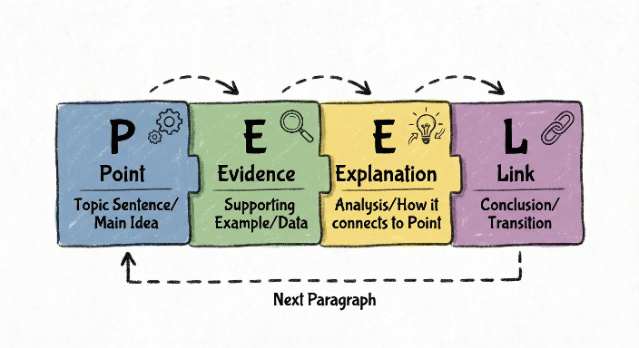
- Topic sentence (first main point)
- Evidence or example (supporting detail)
- Explanation (how this supports your thesis)
- Transition (bridge to next paragraph)
III. Body Paragraph 2
- Topic sentence (second main point)
- Evidence or example
- Explanation
- Transition
IV. Body Paragraph 3
- Topic sentence (third main point)
- Evidence or example
- Explanation
- Transition
V. Conclusion
- Restate thesis (use different wording)
- Summarize main points (briefly)
- Closing thought (significance or final insight)
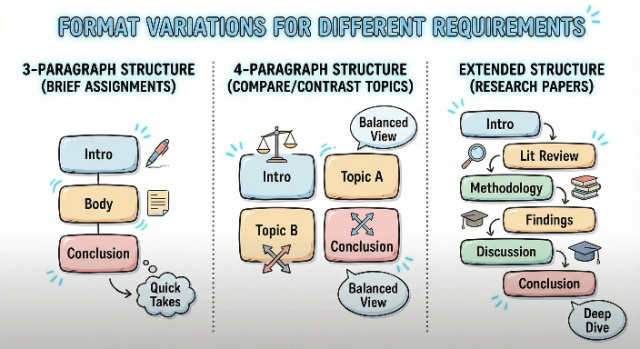
Note: You can add more body paragraphs depending on your topic's complexity. Most middle and high school essays have 3 body paragraphs, while college essays may include 4-6.
The key is maintaining consistent structure across all body paragraphs. Each should follow the same pattern: topic sentence, evidence, explanation, transition.
How to Create Your Informative Essay Outline: 5 Steps

Step 1: Understand Your Topic and Assignment
Before you start outlining, make sure you fully understand what you're supposed to write about.
Review your assignment requirements carefully. Check the required length, number of sources, citation format (MLA, APA, Chicago), and due date. Identify any specific questions your essay must answer.
Ask yourself:
- What exactly am I supposed to explain or inform readers about?
- Who is my audience, and what do they already know?
- What's the scope of this essay (broad overview vs. deep dive)?
- Are there specific aspects I must cover or can skip?
If your topic feels too broad (like "climate change"), narrow it down to something specific you can cover thoroughly (like "how melting permafrost releases greenhouse gases").
Step 2: Collect and Categorize Your Research
Strong outlines are built on solid research. Don't try to outline before you know what information you have.
Start with preliminary research from credible sources. Academic databases, educational websites (.edu), government sources (.gov), and peer-reviewed journals are your best options. Take notes as you read, writing down key facts, statistics, expert quotes, and examples.
Here's the crucial step: Group related information together.
As you research, you'll notice certain facts naturally cluster around the same subtopic. These clusters will become your body paragraphs.
For example, if you're writing about solar energy, you might find information naturally grouping into:
- How photovoltaic cells work
- Components of solar panel systems
- Benefits and limitations of solar power
Each of these clusters becomes a main point in your outline.
Pro tip: Use different colored highlighters or digital tags to mark information belonging to the same category. This makes outline organization much faster.
Step 3: Write a Clear Thesis Statement
Your thesis statement is the foundation of your entire outline. Every point in your outline must connect back to it.
For informative essays, your thesis should clearly state what you'll inform readers about and preview your main points. It should be specific, not vague.
Weak thesis: "This essay is about renewable energy."
Strong thesis: "Solar energy systems convert sunlight into electricity through photovoltaic cells, inverters, and battery storage, providing renewable power with both environmental benefits and practical limitations."
Notice how the strong thesis tells readers exactly what aspects of solar energy you'll explain. This gives you a clear roadmap for your outline.
Thesis formula for informative essays:
[Topic] + [aspect/process you'll explain] + [main points you'll cover] = Strong thesis
Once you have your thesis, each body paragraph should explain one of the main points you mentioned.
Still Struggling With That Essay?
Submit With Total Confidence
No AI ever. Just real academics who know what graders want
Step 4: Organize Main Points Logically
Now that you have your thesis and research clusters, decide what order makes the most sense.
Choose an organizational pattern that fits your topic:
Chronological/Sequential - Use this when explaining a process or historical development
Example: Life cycle of a butterfly, steps in photosynthesis, history of the internet
Spatial - Use this when describing physical locations or structures
Example: Tour of the International Space Station, anatomy of the human heart, layout of ancient Rome
Topical/Categorical - Use this when breaking a topic into subtopics
Example: Types of renewable energy, branches of government, causes of World War I
Cause and Effect - Use this when explaining why something happens and what results
Example: How deforestation affects ecosystems, effects of sleep deprivation, causes of economic recession
Order your main points strategically. Some writers prefer starting with the strongest point to hook readers immediately. Others build up to the strongest point for maximum impact. Either approach works—just be intentional about it.
Make sure each point distinctly relates to your thesis without repeating information from other paragraphs.
Step 5: Add Supporting Details
Your outline isn't complete until you add the evidence and examples under each main point.
Under each topic sentence, list the specific facts, statistics, quotes, or examples you'll use. You don't need to write full sentences—brief notes are fine.
Example:
III. Body Paragraph 2: Inverters convert DC to AC power
A. Topic: Solar panels produce direct current (DC)
B. Evidence: Homes use alternating current (AC) [Source: Energy.gov]
C. Evidence: Inverters efficiency rate 95-98% [Source: Smith, 2023]
D. Example: Typical home system uses 5-10 kW inverter
E. Transition: After conversion, electricity needs storage...
Include source information in your outline. Note the author name, year, or source so you can easily cite it when writing your draft. This saves massive time later.
Identify gaps: As you fill in details, you might discover sections that need more research. That's the whole point of outlining—catching these issues before you start writing.
Ready to turn your outline into a complete essay? Follow the step-by-step informative essay writing guide for detailed instructions on drafting, revising, and polishing your work.
Types of Outline Formats
Alphanumeric Outline (Most Common)
The alphanumeric format uses a combination of Roman numerals, capital letters, Arabic numerals, and lowercase letters to show hierarchy.
Structure:
I. First main point
A. First subpoint
B. Second subpoint
1. Supporting detail
2. Supporting detail
a. Further detail
b. Further detail
When to use it: This is the standard format for most academic essays. Use alphanumeric outlines when you need to show multiple levels of information hierarchy clearly.
Decimal Outline
The decimal format uses numbers exclusively to show relationships between ideas.
Structure:
1.0 First main point
1.1 First subpoint
1.2 Second subpoint
1.2.1 Supporting detail
1.2.2 Supporting detail
When to use it: Decimal outlines work well for scientific or technical papers where precise numbering helps readers follow complex information. They're less common for standard informative essays.
Full Sentence vs. Topic Outline
Topic Outline uses brief phrases or keywords:
I. Introduction
A. Hook about water scarcity
B. Background on water cycle
C. Thesis statement
Full Sentence Outline uses complete sentences:
I. Introduction
A. Over 2 billion people lack access to safe drinking water.
B. Understanding the water cycle reveals why water is a limited resource.
C. The water cycle consists of evaporation, condensation, precipitation, and collection.
Pros and cons:
Topic outlines are faster to create and easier to adjust. They give you flexibility in how you phrase ideas when drafting.
Full sentence outlines take longer but force you to think through your exact points. They make drafting faster because you've already written the framework.
When to use which: Use topic outlines for shorter essays or when you're still developing your ideas. Use full sentence outlines for research papers or when your instructor requires them.
Your Time Is Worth More Than This
Get Hours Back. Get a Better Essay
Zero AI. Zero plagiarism. Just expert-level writing.
Informative Essay Outlines by Grade Level
Middle School Outline (Grades 6-8)
Middle school informative essays typically run 3-5 paragraphs (500-800 words). Your outline should reflect this simpler structure.
Key characteristics:
- 3 body paragraphs (or 1 body paragraph for 3-paragraph essays)
- 1-2 pieces of evidence per paragraph
- Clear, simple topic sentences
- Basic transitions between paragraphs
Example Middle School Outline:
Topic: The Water Cycle
I. Introduction
- Hook: Question about where rain comes from
- Background: Water moves in continuous cycle
- Thesis: Water cycle has four stages—evaporation, condensation, precipitation, collection
II. Body Paragraph 1: Evaporation
- Topic: Water turns from liquid to vapor
- Evidence: Heat from sun causes evaporation
- Example: Water evaporates from oceans, lakes, rivers
- Transition: After water evaporates, it rises into atmosphere
III. Body Paragraph 2: Condensation
- Topic: Water vapor cools and forms clouds
- Evidence: Water vapor condenses on dust particles
- Example: Clouds are billions of water droplets
- Transition: When droplets get heavy, precipitation occurs
IV. Body Paragraph 3: Precipitation and Collection
- Topic: Water falls as rain, snow, or hail
- Evidence: Water returns to Earth's surface
- Example: Water collects in oceans, rivers, groundwater
- Transition: Cycle begins again with evaporation
V. Conclusion
- Restate: Four stages move water continuously -
- Summary: Evaporation - condensation - precipitation - collection
- Closing: Cycle essential for life on Earth
High School Outline (Grades 9-12)
High school essays require more depth—typically 5 paragraphs minimum (800-1,500 words). Your outline should include more detailed evidence and source citations.
Key characteristics:
- 3-5 body paragraphs
- 2-3 pieces of evidence per paragraph
- Source citations noted in outline
- More sophisticated topic sentences
- Stronger transitions showing relationships between ideas
Example High School Outline:
Topic: How Social Media Affects Teen Mental Health
I. Introduction
- Hook: Statistics about teen social media use (7 hrs/day)
- Background: Social media designed for engagement
- Thesis: Social media platforms use psychological principles including variable rewards, social validation, and FOMO to create habitual usage that affects teens' mental health, sleep patterns, and real-world relationships
II. Body Paragraph 1: Variable Reward Mechanisms
- Topic: Platforms use unpredictable rewards to drive engagement
- Evidence: Dopamine release with each notification (Stanford, 2023)
- Evidence: Similar to slot machine psychology (Brown, 2022)
- Example: Instagram likes provide variable social rewards
- Analysis: Creates checking behavior and anxiety
- Transition: Beyond dopamine, social validation drives usage
III. Body Paragraph 2: Social Validation and Self-Esteem
- Topic: Teens seek validation through likes and comments
- Evidence: Correlation between social media use and depression (APA, 2023)
- Evidence: Comparison culture impacts self-worth (Miller & Johnson, 2022)
- Example: Photo editing apps and unrealistic standards
- Analysis: External validation replaces internal self-worth
- Transition: Fear of missing out compounds these effects
IV. Body Paragraph 3: FOMO and Constant Connectivity
- Topic: Fear of missing out drives compulsive checking
- Evidence: 70% of teens report feeling excluded online (Pew Research, 2023)
- Evidence: Average teen checks phone 100+ times daily (Common Sense, 2023)
- Example: Group chat anxiety and social pressure
- Analysis: Disrupts sleep and reduces in-person interaction
- Transition: These factors combine to impact overall wellbeing
V. Conclusion
- Restate: Three psychological mechanisms drive harmful usage patterns
- Summary: Variable rewards, validation seeking, FOMO create mental health challenges
- Closing: Understanding these mechanisms helps teens use social media more mindfully
College Outline
College-level informative essays demand extensive research and nuanced analysis (1,000-2,000+ words). Outlines should be detailed and include multiple sources per point.
Key characteristics:
- 4-7 body paragraphs
- 3-4 pieces of evidence per paragraph
- Full citations in outline (Author, Year)
- Complex organizational patterns
- Sophisticated analysis of evidence
- Counterpoint consideration when relevant
Example College Outline:
Topic: Neuroplasticity and Adult Learning
I. Introduction
- Hook: Traditional belief that adult brains can't change
- Background: Recent neuroscience challenges this assumption
- Thesis: Neuroplasticity—the brain's ability to form new neural connections—enables adult learning through synaptic strengthening, neurogenesis, and cortical remapping, with implications for education, rehabilitation, and cognitive aging
II. Defining Neuroplasticity
- Topic: Brain's capacity to reorganize structure and function
- Evidence: Definition and mechanisms (Doidge, 2007)
- Evidence: Structural vs functional plasticity (Kolb & Whishaw, 2021)
- Historical context: Discovery challenged fixed brain theory
- Transition: Three primary mechanisms enable this plasticity
III. Synaptic Strengthening
- Topic: Long-term potentiation strengthens neural connections
- Evidence: Hebb's law—neurons that fire together wire together (Hebb, 1949)
- Evidence: Molecular mechanisms of LTP (Kandel, 2001)
- Research: London taxi drivers' hippocampal changes (Maguire et al., 2000)
- Analysis: Repeated practice physically alters brain structure
- Transition: Beyond strengthening, new neurons can form
IV. Adult Neurogenesis
- Topic: New neuron formation continues into adulthood
- Evidence: Neurogenesis in hippocampus (Eriksson et al., 1998)
- Evidence: Environmental enrichment increases neurogenesis (Kempermann et al., 2002)
- Research: Exercise promotes BDNF production (Cotman & Berchtold, 2002)
- Analysis: Challenges belief in fixed neuron count
- Transition: Existing cortical areas can also reorganize
V. Cortical Remapping
- Topic: Brain regions can assume new functions
- Evidence: Phantom limb studies show cortical reorganization (Ramachandran, 1998)
- Evidence: Blind individuals' visual cortex processes touch (Sadato et al., 1996)
- Research: Stroke recovery through remapping (Nudo, 2013)
- Analysis: Demonstrates functional plasticity throughout life
- Transition: These mechanisms have practical applications
VI. Implications for Adult Learning
- Topic: Neuroplasticity principles inform learning strategies
- Application: Spaced repetition strengthens synapses (Cepeda et al., 2006)
- Application: Physical exercise enhances learning capacity
- Application: Novel experiences promote neurogenesis
- Analysis: Adult learning requires different approach than child learning
- Limitations: Plasticity decreases with age but never ceases
VII. Conclusion
- Restate: Brain plasticity enables lifelong learning through multiple mechanisms
- Summary: Synaptic strengthening, neurogenesis, remapping work together
- Significance: Transforms understanding of education and aging
- Closing: Adult brain capacity exceeds previous assumptions
Complete Outline Examples
Example 1: Five-Paragraph Essay Outline
Topic: How Bees Make Honey
Grade Level: Middle School
Format: Alphanumeric
I. Introduction
- Hook: "A single bee produces only 1/12 teaspoon of honey in its lifetime, yet a colony can produce 60 pounds per year."
- Background: Honey production is complex process requiring thousands of bees working together. Bees collect nectar from flowers and transform it through remarkable process.
- Thesis statement: Bees create honey through three main stages: collecting nectar from flowers, processing it in the hive through enzyme addition and evaporation, and storing it in wax honeycomb cells.
II. Body Paragraph 1: Nectar Collection
- Topic sentence: The honey-making process begins when forager bees collect nectar from flowering plants.
- Evidence: Bees visit 50-100 flowers during single trip (USDA)
- Detail: Bees store nectar in special honey stomach (not regular stomach)
- Detail: Enzymes begin breaking down nectar during flight back to hive
- Transition: Once back at hive, nectar undergoes transformation
III. Body Paragraph 2: Processing in the Hive
- Topic sentence: Inside the hive, bees process raw nectar into honey through enzyme addition and water evaporation.
- Evidence: House bees pass nectar mouth-to-mouth, adding enzymes (invertase) that break down complex sugars
- Evidence: Bees fan wings to evaporate water, reducing moisture from 70% to 18%
- Detail: Process takes several days of continuous work
- Example: Temperature maintained at 95°F for optimal evaporation
- Transition: After processing complete, bees prepare for storage
IV. Body Paragraph 3: Storage in Honeycomb
- Topic sentence: Bees store finished honey in hexagonal wax cells and seal it for preservation.
- Evidence: Hexagonal shape uses least wax while maximizing storage space -
- Evidence: Bees cap cells with wax when honey reaches proper moisture content
- Detail: Sealed honey can last indefinitely (honey found in Egyptian tombs still edible after 3,000 years)
- Transition: This stored honey feeds colony through winter
V. Conclusion
- Restatement: Honey production requires sophisticated three-stage process of collection, processing, and storage.
- Summary: Foragers gather nectar, house bees process it through enzyme addition and evaporation, and workers store it in wax cells.
- Closing thought: This remarkable natural process has sustained bee colonies for millions of years while providing humans with nature's perfect food.
Why this outline works:
- Clear thesis previewing three main points
- Each body paragraph focuses on one stage
- Chronological organization matches natural process
- Specific details noted but not written as full paragraphs
- Transitions show progression through process
Example 2: Extended Essay Outline
Topic: The Great Pacific Garbage Patch
Grade Level: High School
Format: Alphanumeric with citations
I. Introduction
- Hook: "An area twice the size of Texas floats in the Pacific Ocean, but it doesn't appear on any map."
- Background: Marine debris accumulates in ocean gyres due to currents. GPGP is largest accumulation zone. Discovered 1997 by Charles Moore.
- Thesis: The Great Pacific Garbage Patch forms through ocean current patterns that concentrate debris, consists primarily of microplastics that harm marine life, and requires innovative cleanup solutions combined with prevention efforts to address effectively.
II. Formation and Location
- Topic: GPGP forms where ocean currents converge in North Pacific Gyre
- Evidence: Located between Hawaii and California (NOAA, 2022)
- Evidence: Subtropical convergence zone creates circular current pattern (Lebreton et al., 2018)
- Detail: Covers 1.6 million square km—twice Texas size
- Analysis: Ocean currents act as conveyor belt, concentrating debris
- Transition: Understanding location helps identify debris sources
III. Composition and Size
- Topic: Patch consists of 1.8 trillion pieces of plastic, mostly microplastics
- Evidence: 94% of plastic pieces are microplastics under 5mm (Ocean Cleanup, 2018)
- Evidence: Total mass estimated at 80,000 tons (Lebreton et al., 2018)
- Evidence: Fishing gear comprises 46% of mass (ghost nets) (Richardson et al., 2019)
- Misconception: Not solid island—more like cloudy soup of plastic particles
- Analysis: Microplastic size makes removal extremely difficult
- Transition: This composition directly impacts marine ecosystems
IV. Environmental Impact
- Topic: Plastic debris harms marine life through ingestion, entanglement, and ecosystem disruption
- Evidence: 700+ species affected by ocean plastic (Kühn et al., 2015)
- Evidence: Seabirds ingest plastic, causing starvation (Wilcox et al., 2015)
- Evidence: Sea turtles mistake bags for jellyfish prey (Schuyler et al., 2014)
- Evidence: Microplastics enter food chain, affecting fish and humans (Rochman et al., 2013)
- Example: Albatross chicks die with stomachs full of bottle caps, lighters
- Analysis: Plastic doesn't biodegrade—only breaks into smaller pieces
- Transition: Multiple cleanup approaches are being tested
V. Cleanup Efforts
- Topic: Technological solutions aim to remove plastic while prevention addresses sources
- Evidence: Ocean Cleanup project using floating barriers (Slat, 2020)
- Evidence: Passive collection systems use natural currents (Ocean Cleanup Foundation, 2021)
- Challenge: Scale of patch makes complete cleanup impractical
- Alternative: Coastal cleanup prevents new plastic from reaching ocean
- Analysis: Cleanup alone insufficient without stopping plastic flow
- Transition: Prevention requires global cooperation
VI. Prevention Strategies
- Topic: Reducing ocean plastic requires legislation, improved waste management, and individual action
- Evidence: Single-use plastic bans in EU, Canada reduce debris (UNEP, 2021)
- Evidence: Improved waste management in developing nations crucial (Jambeck et al., 2015)
- Evidence: 80% of ocean plastic originates from land sources (NOAA, 2022)
- Solution: Better recycling infrastructure in coastal regions
- Solution: Corporate responsibility for product lifecycle
- Analysis: Prevention more cost-effective than ocean cleanup
VII. Conclusion
- Restatement: GPGP results from current patterns concentrating plastic debris that harms marine ecosystems
- Summary: Patch's massive scale, microplastic composition, and environmental impact demand combined cleanup and prevention approach
- Significance: Problem reflects broader plastic pollution crisis affecting all oceans
- Closing: Solutions exist but require immediate global action before damage becomes irreversible
Why this outline works:
- Citations noted throughout for easy reference during drafting
- Six body paragraphs address complex topic thoroughly
- Logical organization: what - impact - solutions
- Evidence includes specific research with dates
- Analysis sections explain significance of evidence
- Strong transitions show connections between sections
Want to see effective informative writing in action? Explore comprehensive collection of informative essay examples that demonstrate how to present information clearly and objectively.
New Customer Offer
Your First Essay Is Free — Up to 2 Pages
No AI. No pressure. No catch.
Free Downloadable Outline Templates
Download ready-to-use outline templates that match your grade level and assignment requirements. Each template includes the standard structure with prompts to help you fill in your specific information.
Available Templates:
All templates are free to download, print, and use for your assignments.
5 Outline Mistakes to Avoid

1. Making Your Outline Too Vague
Mistake: "Talk about causes" or "Mention effects"
Problem: Vague outline points don't guide your writing. When you start drafting, you'll waste time figuring out what you meant.
Fix: "Explain three primary causes: deforestation (15% of emissions), industrial pollution (21%), and transportation (27%)"
Be specific enough that someone else could write your essay from your outline.
2. Creating Unbalanced Structure
Mistake: Body paragraph 1 has five subpoints (A, B, C, D, E), but body paragraphs 2 and 3 each have only one subpoint.
Problem: This imbalance suggests you haven't researched all topics equally. Your essay will feel lopsided, with one overly detailed section and others that seem rushed.
Fix: Aim for roughly equal development across paragraphs. If one paragraph has significantly more supporting details, either split it into two paragraphs or expand research for other sections.
You don't need exactly the same number of subpoints, but you should be close (all paragraphs have 2-3 pieces of evidence, not 1-5).
3. Outlining Without a Clear Thesis
Mistake: Creating an outline before you know what your main point is.
Problem: Your outline becomes a random collection of facts about your topic rather than a coherent argument. Body paragraphs don't connect to each other or support a central idea.
Fix: Write your thesis statement first. Make sure it clearly states what you'll inform readers about and previews your main points. Then create body paragraphs that each develop one aspect of that thesis.
Every single section in your outline should somehow relate back to your thesis.
4. Skipping the Outline Entirely
Mistake: "Outlines take too much time. I'll just start writing."
Problem: Without an outline, you're likely to write yourself into corners, repeat information, forget important points, or ramble without clear direction. You'll spend more time revising a messy draft than you would have spent outlining.
Fix: Spend 20-30 minutes outlining. Consider it insurance against writing problems. Even a rough outline is better than none.
If you're really pressed for time, create at least a basic skeleton showing your main points and the order you'll address them.
5. Over-Outlining (Writing Full Paragraphs)
Mistake: Writing complete sentences and entire paragraphs in your outline.
Problem: You're essentially writing your essay twice—once in the outline and once in the draft. This defeats the purpose of outlining, which is to plan efficiently.
Fix: Keep outline points brief. Use keywords, short phrases, and abbreviated notes. Save full sentence writing for your actual draft.
Exception: Full sentence outlines are okay if your instructor specifically requires them or if you find they help you think through complex ideas.
From Outline to First Draft
Your outline is a roadmap, not a script. Here's how to use it effectively when writing your draft.
Start with your introduction: Expand your hook into 1-2 attention-grabbing sentences. Develop your background information into 2-3 sentences providing necessary context. Include your thesis statement (already written in your outline).
Turn each main point into a paragraph: Begin with your topic sentence. Expand evidence notes into full sentences with proper citations. Add explanation sentences that connect evidence back to your thesis. Include transition sentences that lead naturally to your next point.
Don't feel locked in: If you discover better organization or additional evidence while writing, it's okay to deviate from your outline. The outline guides you but doesn't imprison you.
Build natural transitions: Your outline probably has simple transitions like "Next" or "Also." When drafting, strengthen these by showing the relationship between ideas: "While X causes immediate effects, Y creates long-term consequences..."
Maintain your structure: The biggest benefit of outlining is organization. Stick to your planned structure even as you add details and polish language.
Most students find that drafting goes 2-3x faster with a solid outline. You're not figuring out what to say while simultaneously figuring out how to say it—the outline already solved the "what" problem.
Ready to turn your outline into a complete essay? Our step-by-step informative essay writing guide walks you through drafting, revising, and polishing your work from first draft to final submission.
Your Essay. Done Right. Delivered on Time. Tell us what you need — our experts handle the research, writing, and formatting. No AI shortcuts. Just expert-level quality.