What Are the Main Benefits of Studying Abroad?
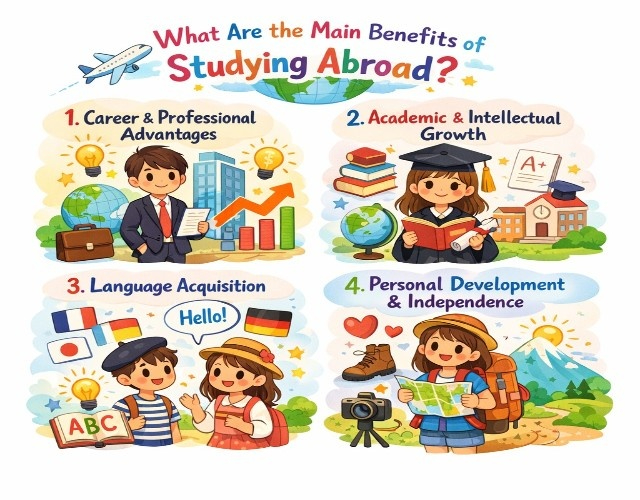
The main benefits of studying abroad include enhanced career prospects (97% employment rate within one year), language acquisition and cultural competency, expanded global professional networks, personal growth and independence, and unique academic opportunities unavailable domestically. Employers rate international experience as the second most important factor after internships when evaluating entry level candidates.
1. Career and Professional Advantages
Study abroad experiences significantly impact career outcomes and earning potential. Graduates with international experience earn $7,000 more annually on average during their first five years compared to those without study abroad experience.
Specific career benefits
| Enhanced employability: 64% of employers actively seek candidates with international experience |
| Competitive advantage: Stand out in crowded job markets with demonstrated adaptability |
| Global networking: Build international professional connections across industries |
| Leadership development: 73% of study abroad alumni report holding leadership positions within five years |
| Industry access: Internship opportunities in international markets unavailable at home |
Multinational corporations particularly value a study abroad experience. Companies like Google, Amazon, Microsoft, and consulting firms prioritize candidates who demonstrate cross cultural competency and global awareness through international study.
2. Academic and Intellectual Growth
Study abroad provides unique academic opportunities that enrich your education beyond standard coursework.
Academic advantages
|
Students studying STEM fields benefit from access to international research facilities and laboratories. Business students gain exposure to international markets and global business practices. Liberal arts students experience cultural and historical sites firsthand rather than through textbooks.
78% of study abroad students report that international experience influenced their academic major or career path, often discovering new interests or confirming existing passions through immersive exposure.
3. Language Acquisition
Immersive language learning through study abroad produces fluency impossible in classroom settings alone. Students living in countries where target languages are spoken achieve intermediate to advanced proficiency in one semester.
Language learning benefits
|
Research shows that students studying abroad for one semester gain language proficiency equivalent to two years of classroom instruction. Full year programs often produce near-native fluency depending on immersion level and effort.
Even studying in English speaking countries develops communication skills. Understanding regional accents, cultural communication styles, and international English variations enhances global communication competency.
4. Personal Development and Independence
Study abroad fundamentally shapes personal growth and maturity. Navigating foreign environments independently builds confidence and problem solving skills transferable to all life areas.
Personal growth outcomes
| Increased independence: Managing daily life in a foreign environment |
| Enhanced adaptability: Adjusting to new cultural norms and expectations |
| Improved problem solving: Navigating challenges without familiar support systems |
| Greater self awareness: Understanding your values through cultural comparison |
| Expanded worldview: Developing global perspective beyond hometown experience |
96% of study abroad participants report increased self confidence. Students develop resilience by overcoming language barriers, cultural misunderstandings, and homesickness, building emotional intelligence that serves them throughout their careers.
When Should You Study Abroad During College?
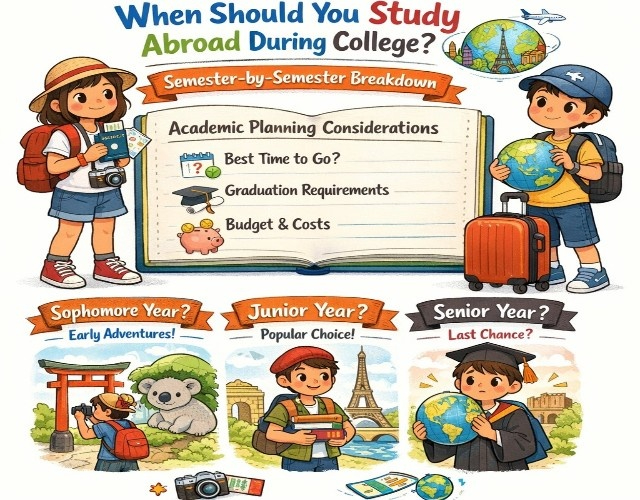
The best time to study abroad is during your sophomore or junior year when you've completed general education requirements but have time remaining to fulfill major requirements. Sophomore year (45% of participants) allows earlier international experience, while junior year (38% of participants) provides more academic maturity and clearer major focus.
A. Semester by Semester Breakdown
1. Freshman year (12% of participants):
|
2. Sophomore year (45% of participants)
|
3. Junior year (38% of participants)
|
4. Senior year (5% of participants)
|
B. Academic Planning Considerations
Start planning 12 to 18 months before your intended departure. Meet with academic advisors to map how international coursework fulfills degree requirements. Research program offerings carefully to ensure courses transfer appropriately.
Critical planning steps
|
Students who plan early lose fewer credits to transfer issues. 85% of students who consult advisors 12+ months in advance graduate on time, compared to 68% who plan 6 months before departure.
How Do You Choose the Right Study Abroad Program?
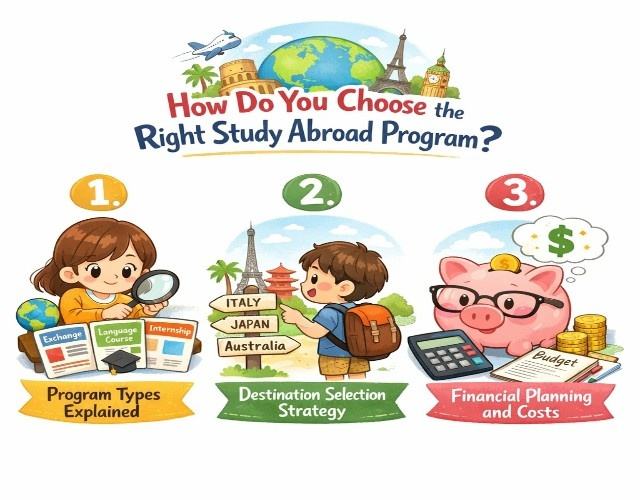
Choose the right study abroad program by aligning destination with academic and career goals, evaluating program types (direct enrollment, exchange, third party provider), assessing language requirements and support services, comparing costs and financial aid availability, and researching safety, housing, and cultural fit factors.
1. Program Types Explained
- Direct enrollment programs: Enroll directly in a foreign university alongside local students. Offers authentic cultural immersion and access to full university resources. Requires higher language proficiency and independence. Best for advanced students with strong language skills.
- Exchange programs: Your home institution partners with a foreign university for reciprocal student exchange. Often costs equivalent to home tuition. Limited spots available with a competitive application process. Excellent value but restricted to partner institutions.
- Third party provider programs: Organizations like CIEE, ISA, or API create structured programs with housing, excursions, and support services. Higher costs offset by comprehensive support. Ideal for first time international travelers or students preferring structured experiences.
- Faculty led programs: Home institution professors lead short term programs (2 to 8 weeks) during breaks. Limited immersion but lower costs and reduced planning burden. Good introduction for students uncertain about a full semester commitment.
2. Destination Selection Strategy
Choose destinations strategically based on multiple factors beyond tourism appeal.
Consider these factors
| Academic strength: Does the location offer programs in your field? |
| Language goals: Immersive language learning or English speaking destination? |
| Career relevance: Industries or companies you want to connect with |
| Cost of living: Daily expenses vary dramatically by location |
| Safety and stability: Research travel advisories and the political climate |
| Cultural interest: Genuine curiosity about culture and lifestyle |
Popular destinations include the United Kingdom (19%), Italy (12%), Spain (11%), France (8%), Germany (6%), and Australia (5%). However, non-traditional destinations like Argentina, South Africa, Japan, or South Korea offer unique experiences with less competition.
3. Financial Planning and Costs
Study abroad costs vary dramatically by location and program type. Budget $10,000 to $35,000 per semester, including tuition, housing, meals, airfare, insurance, and personal expenses.
Cost breakdown by region
| Western Europe: $15,000 to $30,000 per semester (high cost of living) |
| Eastern Europe: $8,000 to $15,000 per semester (affordable with rich culture) |
| Asia: $10,000 to $20,000 per semester (varies by country) |
| Latin America: $8,000 to $16,000 per semester (affordable Spanish immersion) |
| Australia/New Zealand: $18,000 to $35,000 per semester (high costs offset by work opportunities) |
Financial aid typically applies to studying abroad. Federal loans, Pell Grants, and institutional aid usually transfer to approved programs. Many schools offer study abroad-specific scholarships ranging from $500 to $5,000.
Scholarship opportunities
|
Students who apply for 5 to 8 scholarships receive average funding of $6,500, significantly reducing out of pocket costs. When managing scholarship applications alongside coursework deadlines, consider using a professional essay writing service to handle routine assignments, allowing focus on competitive scholarship essays that directly fund your international experience.
What Does the Study Abroad Application Process Require?
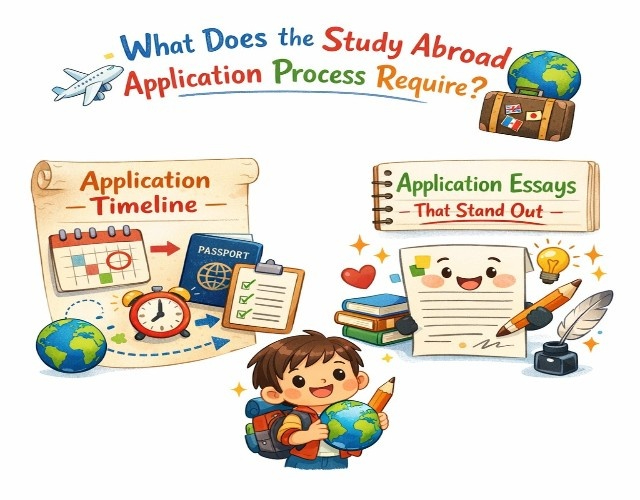
Study abroad applications require completed application forms with essays explaining your goals and motivation (2 to 3 essays averaging 500 words each), academic transcripts demonstrating a minimum 2.75 to 3.0 GPA, 1 to 2 faculty recommendations from professors who know your work, a passport valid for six months beyond the return date, and program specific requirements like language proficiency tests or prerequisite courses.
Application Timeline
12 to 18 months before departure
9 to 12 months before departure
6 to 9 months before departure
3 to 6 months before departure
1 to 3 months before departure
|
Application Essays That Stand Out
Study abroad application essays require thoughtful reflection about your goals and motivation. Selection committees read hundreds of essays stating generic desires to "experience new cultures" or "broaden horizons."
Effective essay elements
|
|
|
|
|
Avoid clichés about "finding yourself" or "stepping outside comfort zones" without specific details. Instead, articulate concrete learning objectives tied to your major and career trajectory.
How Do You Overcome Common Study Abroad Challenges?
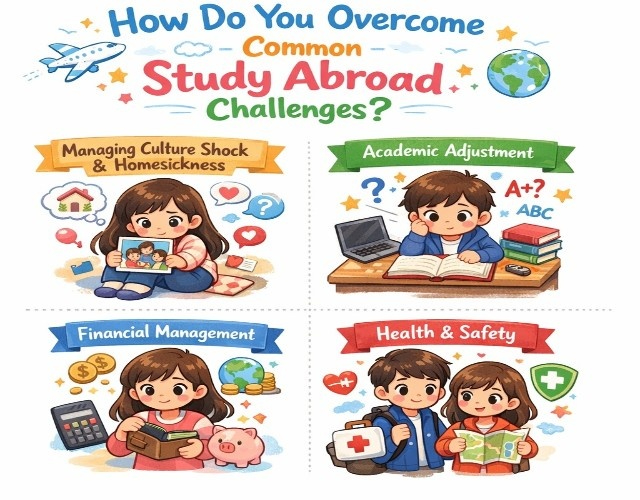
Common study abroad challenges include culture shock and homesickness (78% experience some level), language barriers affecting academic and social integration, academic adjustment to different teaching styles, financial management across currencies, and navigating unfamiliar healthcare and safety systems. Proactive preparation and realistic expectations minimize these challenges significantly.
1. Managing Culture Shock and Homesickness
Culture shock follows predictable phases: honeymoon (excitement), negotiation (frustration), adjustment (growing comfort), and mastery (feeling at home). Most students experience the negotiation phase 3 to 6 weeks after arrival, when initial excitement fades, and cultural differences feel overwhelming.
Coping strategies
|
Research shows students who join 2 to 3 local activities within the first month report 65% less homesickness and 3x faster cultural adjustment compared to those who socialize primarily with other international students.
2. Academic Adjustment
Teaching styles vary significantly across countries. European universities often emphasize independent study with fewer assignments but high stakes final exams. Asian universities may include more rote memorization and formal classroom dynamics.
Academic success strategies
|
Don't expect grades equivalent to home institution. Grading standards differ internationally, and studying in non native language naturally challenges academic performance. Most home institutions apply pass/fail conversion for international coursework specifically to reduce grade pressure.
3. Financial Management
Managing finances in foreign currency while abroad requires planning and discipline. Unexpected expenses frequently exceed budget estimates.
Money management tips
|
Students who create detailed weekly budgets overspend by only 8% compared to 23% for those without budgets, keeping study abroad financially sustainable.
4. Health and Safety
Research destination specific safety concerns and health requirements before departure. Register with your country's embassy upon arrival. Purchase comprehensive international health insurance (usually required by programs).
Safety practices
|
97% of study abroad participants report feeling safe throughout their experience when following basic safety protocols and researching destinations thoroughly before departure.
What Are Study Abroad Alternatives for budget conscious students?
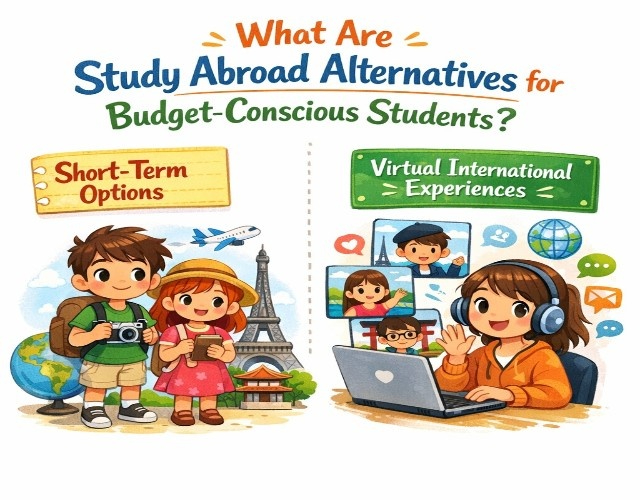
Budget conscious students can consider short term programs (2 to4 weeks) costing $3,000 to $8,000, virtual exchange programs offering international collaboration without travel costs, international internships providing paid work experience abroad, study abroad scholarships and grants specifically for low income students, or community college study abroad programs offering identical experiences at lower costs.
Short Term Options
Faculty led programs during winter break or summer provide international experience without a full semester commitment or cost. Programs last 2 to 8 weeks and focus on specific topics with home institution professors.
Short term advantages
- Lower total costs ($3,000 to $8,000)
- No semester away from campus activities
- Structured support from familiar professors
- Credits transfer seamlessly
- Less intimidating for first time travelers
Short term programs work well for STEM majors with rigid course sequences, student athletes during their seasons, or students with significant campus commitments like leadership roles or employment.
Virtual International Experiences
Virtual exchange programs, accelerated by COVID-19, now offer permanent international collaboration opportunities without travel. Students collaborate with international peers on projects, participate in joint courses, or complete internships remotely.
Virtual exchange benefits
- Zero travel costs (completely free or minimal fees)
- Maintain on campus commitments simultaneously
- Still build international networks and perspectives
- Flexible scheduling across time zones
- Accessible for students with travel restrictions
While virtual experiences lack cultural immersion, they provide an international collaboration experience increasingly valued by employers in the remote work era.
Does Study Abroad Delay Graduation?
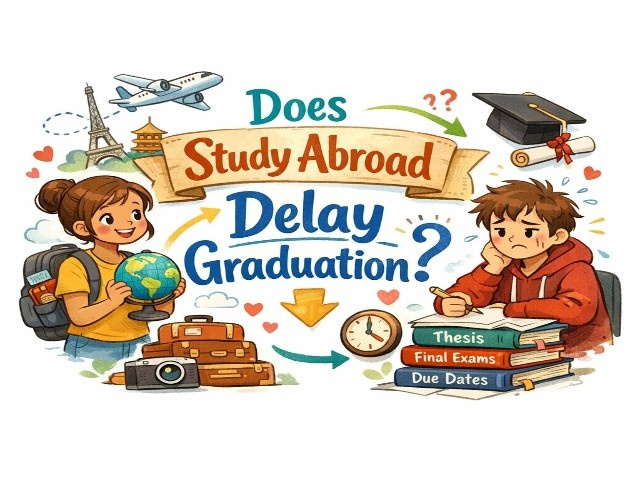
Study abroad typically doesn't delay graduation when planned properly. 85% of students who consult advisors 12+ months before departure graduate on time. However, poor planning, incompatible course offerings, or credit transfer issues can extend graduation by 1 to 2 semesters for 15 to 20% of study abroad participants.
Strategies to graduate on time
|
Students who verify credit transfer before departure experience 92% on-time graduation compared to 68% for those who investigate equivalencies after returning home with incompatible credits.
Key Takeaways
Study abroad successfully by implementing these evidence based strategies:
Career investment pays dividends: 97% of study abroad alumni find employment within 12 months versus 49% of typical graduates, with $7,000 higher average annual earnings during first five years justifying upfront costs.
Optimal timing is sophomore or junior year after completing general education but with sufficient time remaining for major requirements. 85% of early planners (12 to 18 months advance) graduate on time compared to 68% planning 6 months ahead.
Choose programs strategically aligning destination with academic goals, career interests, and language objectives rather than tourism appeal alone. Research program types thoroughly, direct enrollment, exchange, third party, or faculty led, matching personal needs and independence levels.
Budget realistically and pursue scholarships aggressively. Costs range $10,000 to $35,000 per semester, but students applying for 5 to 8 scholarships receive an average funding of $6,500. Financial aid typically transfers to approved programs.
Prepare for challenges, including culture shock (78% experience), homesickness, academic adjustment, and financial management. Students joining 2 to 3 local activities within the first month experience 3x faster cultural adjustment.
Study abroad transforms personal and professional trajectories when approached strategically. The 96% of participants reported increased self confidence, and 76% gaining clearer career direction demonstrate lasting impact beyond resume enhancement. When managing study abroad applications alongside coursework, consider using a reliable essay writing service for routine assignments, allowing focus on competitive program applications and scholarship essays that directly fund your international education experience.